
The short answer
Yes, for a careful driver. Driving is the easiest way to see much of Turkey, motorways and main roads between cities are generally in excellent condition, and the roads in the tourist regions are well signed. But accidents are more common than in Western Europe, mostly because of speeding, risky overtaking and careless driving, and UK, US and Australian government advice all warn about country roads at night. Drive defensively, avoid unlit rural roads after dark and allow more time than your navigation app suggests.
What the numbers say
According to the Turkish Statistical Institute (TÜİK), 6,035 people died in road accidents in Turkey in 2025 – 2,541 at the scene and 3,494 within 30 days – which is 5% fewer than in 2024. TÜİK attributes 90.6% of recorded faults to drivers. That is roughly 70 deaths per million inhabitants, against about 43 across the EU, where the European Commission counted around 19,400 deaths in 2025. Turkish roads are riskier than the EU average, but much of the risk comes from behaviour you can avoid.
Where driving is easy – and where it is hard
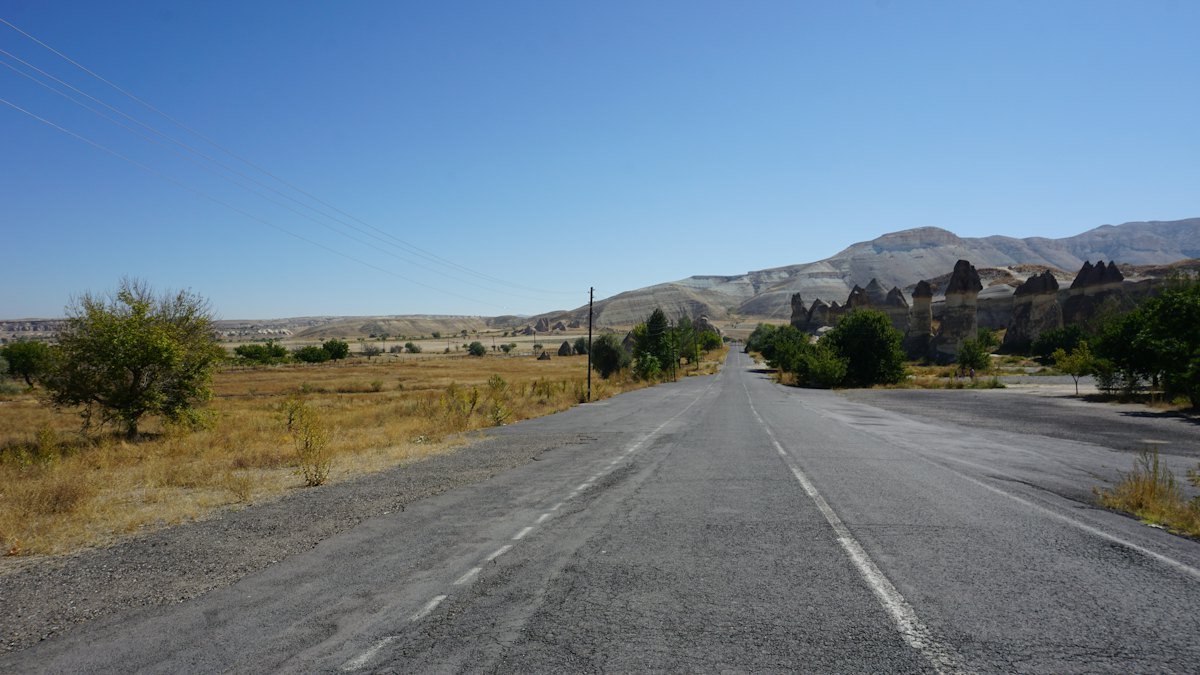
Easier: the D400 coast road around Antalya, Belek, Side and Alanya, which is divided, lit in towns and toll-free; motorways such as Istanbul–Izmir, Izmir–Aydın and Izmir–Çeşme; the road from Milas–Bodrum Airport to the peninsula; and the roads between the villages of Cappadocia.
More demanding: central Istanbul, with heavy traffic, bus lanes and fast lane changes; old towns with narrow lanes such as Kaleiçi, Bodrum and Kalkan; hairpin roads on the Bozburun peninsula and down to Ölüdeniz, Çıralı and Kabak; the cliff road between Kalkan and Kaş; mountain roads near Trabzon after heavy rain; and the Bodrum peninsula on summer evenings.
Local driving habits to expect
- Overtaking on two-lane roads is frequent, sometimes with little room. Slower vehicles often move towards the edge to let others pass.
- Flashing headlights usually means “I am coming through”, not “go ahead”.
- The horn is used as a warning, especially on bends and when overtaking.
- Dolmuş minibuses stop wherever passengers wave them down.
- Scooters filter between lanes and overtake on both sides.
- Do not assume other drivers will stop at red lights or stop signs; the US State Department notes that drivers routinely ignore them.
- On rural roads, expect tractors, farm vehicles and animals.
Night driving and rural roads
Outside towns, many roads are unlit, and after dark you can meet animals, pedestrians, tractors and vehicles with dim lights or none at all. Plan long drives so you arrive before dark. After a late flight, stay near the airport and continue in daylight – our airport guide lists the nearest bases. In winter, snow and ice are common in Cappadocia and the mountains; ask for winter tyres.
Police checkpoints and accidents
Traffic police and gendarmerie checkpoints are common, especially on main roads in summer. Slow down, follow instructions and keep your licence, passport and rental papers to hand. Speed cameras and average-speed sections are widespread, and fines for rental cars reach the company, which passes them on to you.
After an accident, call 112 if anyone is hurt, then call the rental company. Do not move the car until the police or the company tell you to: insurance usually requires an official accident report.
Travel advice and border areas
The UK Foreign Office advises against all travel within 10 km of the border with Syria because of fighting. The regions covered on this site – Istanbul, the Aegean and Mediterranean coasts, Cappadocia, Pamukkale and Trabzon – are hundreds of kilometres away. Check your own government’s current advice before you travel, as it can change.
Ten habits for a safe trip
- Choose full coverage with zero or low excess, so a scrape does not turn into a dispute.
- Photograph the car all round at pickup.
- Plan long drives in daylight.
- Keep right and let faster cars pass.
- Overtake only with a clear view of the road ahead.
- Leave space behind dolmuş minibuses and trucks.
- Approach junctions and roundabouts expecting others not to give way.
- Never drink and drive: the limit is 0.5 g/l and the penalties are severe.
- Wear seat belts in every seat and use proper child seats – see our driving rules.
- Save 112 and the rental company’s number in your phone.
Last reviewed: 13 October 2026. Rental conditions change; the offer you select always shows the current terms.